

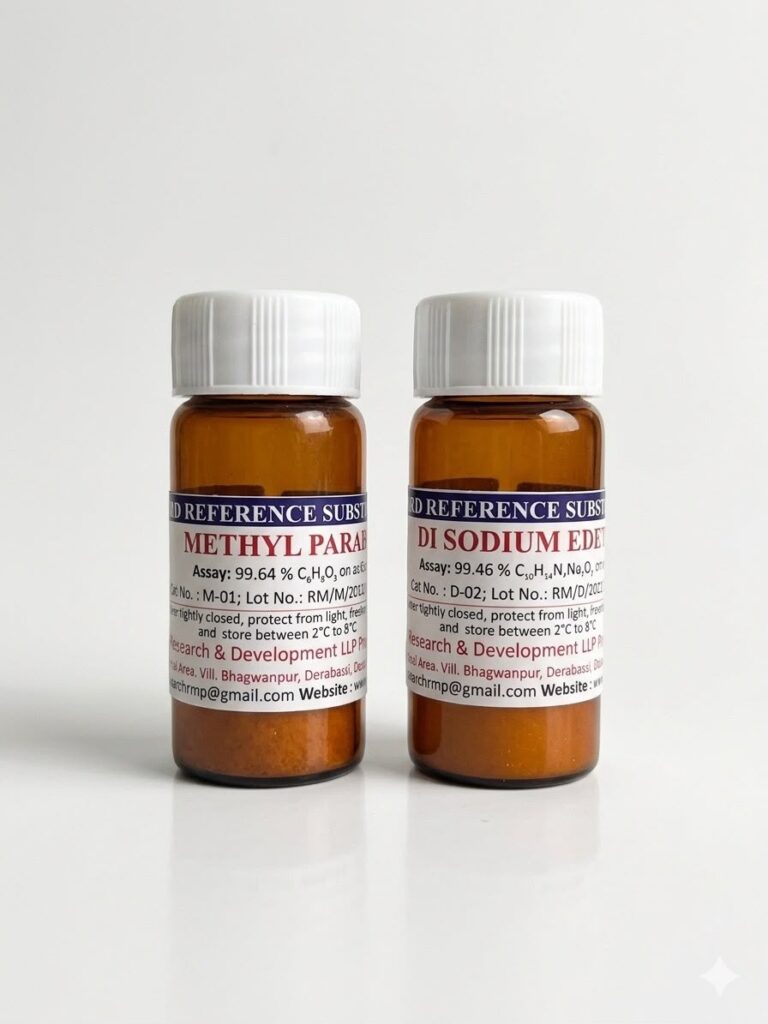
 For Analytical laboratories, accuracy, reliability, and consistency are essential for obtaining trustworthy test results. Whether testing pharmaceutical products, chemicals, raw materials, or environmental samples, laboratories need reliable reference materials to verify the performance of their analytical methods.
A Certified Reference Material (CRM) is an important tool used in laboratories for calibration, method validation, quality control, and measurement accuracy. CRMs help laboratories compare their analytical results against certified values with stated measurement uncertainty and traceability, where applicable.
In this guide, we will explain what a CRM is, why it is important, its major applications, and how to select the right certified reference material for your laboratory.
A Certified Reference Material (CRM) is a reference material characterized by a metrologically valid procedure and accompanied by a certificate that provides the certified property value, its associated uncertainty, and a statement of metrological traceability.
CRMs are designed to support reliable measurements and help laboratories evaluate the accuracy and performance of analytical methods.
Depending on the intended application, CRMs may be used for chemical analysis, instrument calibration, quality control, method validation, and other laboratory testing activities.
Why Are Certified Reference Materials Important?
CRMs play an important role in maintaining the quality and reliability of laboratory measurements.
1. Instrument Calibration
CRMs can be used to establish or verify the relationship between an instrument’s response and known reference values, when appropriate for the measurement method.
2. Analytical Method Validation
Laboratories use suitable reference materials to assess analytical method performance, including accuracy and other relevant performance characteristics.
3. Quality Control
CRMs help laboratories monitor analytical performance and identify potential variations in measurement results over time.
4. Measurement Traceability
The information provided in a CRM certificate supports metrological traceability when the stated traceability chain is appropriate for the measurement being performed.
5. Reliable and Consistent Results
Using suitable reference materials helps laboratories assess the reliability of their analytical procedures and maintain consistent testing practices.
CRM vs. Reference Standard: What Is the Difference?
The terms “reference standard” and “certified reference material” are not always interchangeable.
A reference standard is a material used as a reference in a measurement or analytical procedure. A CRM has additional requirements: it must be characterized using a metrologically valid procedure and accompanied by a certificate containing certified values, associated uncertainty, and traceability information.
Therefore, when selecting a material for a critical analytical application, laboratories should verify its certification, documentation, and suitability for the intended purpose rather than relying on the product name alone.
How to Choose the Right Certified Reference Material?
Before purchasing a CRM, laboratories should consider the following factors:
- Intended Application: Confirm that the material is suitable for the specific analytical method and testing requirement.
- Certified Value: Check the certified property value and its units.
- Measurement Uncertainty: Review the uncertainty stated on the certificate.
- Certificate of Analysis (COA): Check the certificate for relevant characterization, validity, and handling information.
- Traceability: Verify the stated metrological traceability information and whether it meets your laboratory’s requirements.
- Storage and Handling: Follow the recommended storage conditions, shelf life, and safety instructions.
- Quality and Certification: Review the manufacturer’s documented quality system and relevant accreditation or conformity claims.
Selecting the right CRM helps laboratories support their measurement quality and meet their analytical requirements.
Why Choose SRD for Certified Reference Materials?
Sabiha Research & Development aims to support laboratories with reference materials for analytical testing and calibration applications. When selecting a product, laboratories should review its specifications, certificate, intended use, and applicable quality documentation to confirm that it meets their requirements.
Explore the available product range to identify suitable reference standards for your laboratory’s analytical testing and quality control needs.
